Q&A with Director Michael Longhurst

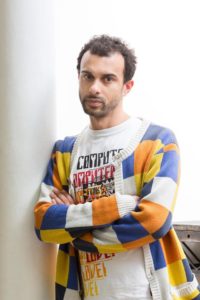
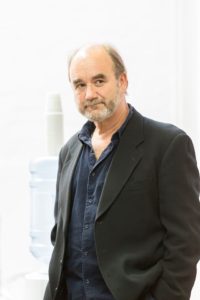
Michael Longhurst has directed many critically acclaimed productions, including Nick Payne’s Constellations in the West End and Broadway. Longhurst is an Associate Director at Southampton’s Nuffield Theatre and his new version of Caryl Churchill’s A Number for Nuffield recently transferred to London’s Young Vic Theatre. Science Centre Stage spoke to Michael Longhurst about his views on science in theatre and on how he worked with designer Tom Scutt on the remarkable stage set for A Number.

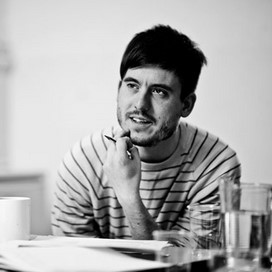
Michael Longhurst
Michael Longhurst

A Number was first produced in 2002 at a time when cloning was very much in the public conscience (not least because of ‘Dolly the Sheep’). What stimulated you to direct A Number again now?

It’s a play that I had read at drama school and had fallen in love with at that moment. I think the line-by-line writing that Carol makes the scenes out of is extraordinary. I studied philosophy at university and I think the thematic ideas of the play are really interesting. They go beyond and above the idea of cloning and into the idea of personal identity, and beyond and above the idea of nature and nurture and into the idea of freewill and determinism. She is so erudite in packing in so many ideas into a very short, punchy play and it’s an incredibly exciting theatrical premise.

Science is a key enabler in understanding who we are, who we are now and who we are becoming.

Fundamentally, we watch an actor pretend to be more than one version of himself, which is absolutely the most basic part of acting and theatre. It allows us to access the idea of a clone with the same genetics but who behaves differently. I love the simplicity, theatricality and complexity of the ideas it draws on. We were looking for an exciting project for Southampton University (where The Nuffield is based). It has a lot of specialization in biomedicine, so we hoped that it would appeal to some of the audience there. I was working with designer Tom Scutt, who also designed Constellations, and we were excited about the design opportunity to really push a conceptual version of this play in how we staged it. The strength of reaction is one of the major factors that has brought it to life again and brought it into town (at the Young Vic).

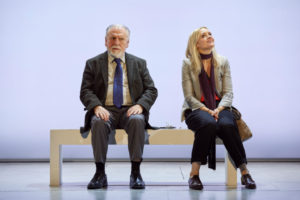
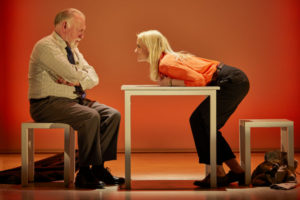
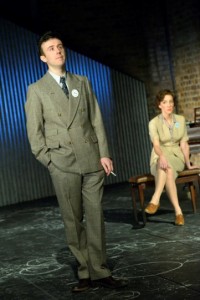
A NUMBER by Churchhill , Writer - Caryl Churchill, Director - Michael Longhurst, Designer - Tom Scutt, Lighting - Lee Curran, The Young Vic Theatre, 2015, Credit: Johan Persson/
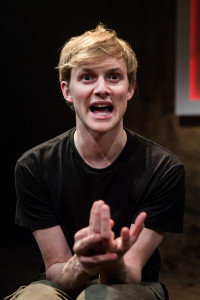
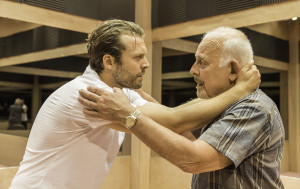
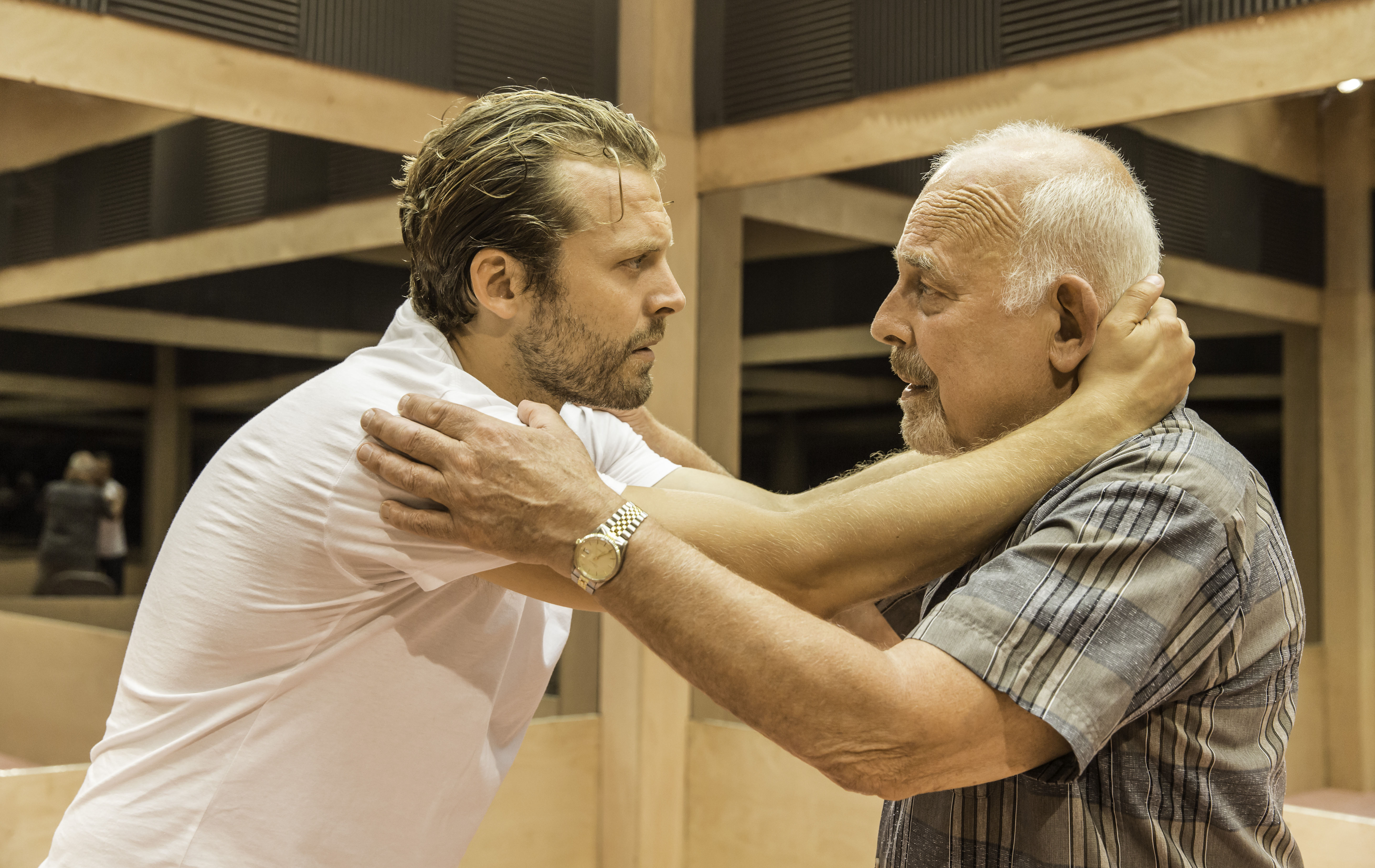
John and Lex Shrapnel in A Number, Young Vic Theatre 2015, Credit: Johan Pehrsson

In rehearsals we were looking at the progress of the genetic world and interestingly as science advances there’s nothing that makes the play obsolete. The ideas that Caryl Churchill puts forward in the play are still pressing and they become more pertinent the more familiar we become with genetic advances and possibilities. Crudely, we haven’t yet cloned a human so the play’s not yet out of date. It is still a play that is asking- ‘what if ?’ The fact that we are more aware of the advances, such as being able to edit the human genome means that out idea of it as something that is in the dim and distant future in some dystopian world is being eroded. Our world is getting closer to this and I think that makes the ethical questions of the play present more pressing.

In developing the production did you talk to scientists in the similar manner to the way that you and Nick Payne did with Constellations?

Interestingly, the play never mentions the word cloning. The characters, certainly the clones, aren’t aware of this process. So in some sense it wasn’t something that the characters in the play necessarily understood. It was an opportunity that was offered to the father and that he benefits from and it’s a complete shock and surprise to the son. We did work in rehearsals to try to understand how cloning works, but actually we didn’t go out to meet scientists who are experts in their field because the characters themselves have a lay understanding of cloning, which we supplemented by research in the rehearsals.

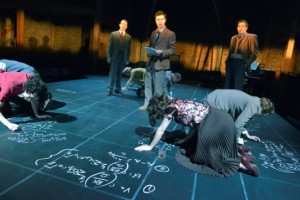
A NUMBER by Churchhill,         , Writer - Caryl Churchill, Director - Michael Longhurst, Designer - Tom Scutt, Lighting - Lee Curran, The Young Vic Theatre, 2015, Credit: Johan Persson/
John and Lex Shrapnel in A Number, Young Vic Theatre 2015, Credit: Johan Pehrsson

How do you go about the process of putting together ideas with stage designer Tom Scutt?

Whenever I enter a design process it feels like there’s what I call top-down and bottom-up work. Top down work asks what are the themes that we are trying to capture? How can we use metaphor? How can we create an environment that has an emotional resonance with what we’re trying to say about the play? And then there’s the practical stuff- the bottom-up stuff – which is what does the play need? A Number actually needs nothing. With two bodies and no props, it frees you from many stage constraints. We decided at Nuffield that we wanted to give the audience a new experience, so we created an installation. We weren’t doing a traditional proscenium arch production of it. We were allowed to play with capacity, and make it an incredibly intimate experience. Tom hit on the idea of using mirrors, which felt like he had very cleanly, profoundly and simply hit upon both the ideas of identity – who are we? – and the idea of a multiplicity of reflections. Often as a director your job is to have these thematic discussions with a designer, and then be brave when they offer you an exciting solution. In a piece of live theatre the actors and audience are sharing a space, and in this instance I put them behind a glass wall and used microphones. But I hope that in addition to the ideas of reflection and identity, it also gives the audience a feeling of watching an interrogation. It’s not dissimilar to when you go to a police line-up through a two-way mirror. I think what that does is tie into the ethical issues, the idea of responsibility, the idea of our agency, the idea of guilt, blame and consequence. I think that all of those were useful social ideas to bring up in a stage design.

Often as a director your job is to have these thematic discussions with a designer, and then be brave when they offer you an exciting solution.

Do you think there is complementarity with Jennifer Haley’s play ‘The Nether’ which literally depicts an interrogation in a near-future science fiction scenario?

Yes, absolutely. Both are taking out technological capabilities and pushing them a little bit further, looking at how humanity will respond if we are able to do those things. And do we like how humanity could respond? And therefore do we want our society to go in that direction? I think that’s the value of all “sci-fi work” is that it allows you to examine the society that we are in through looking at a society we’re not in.

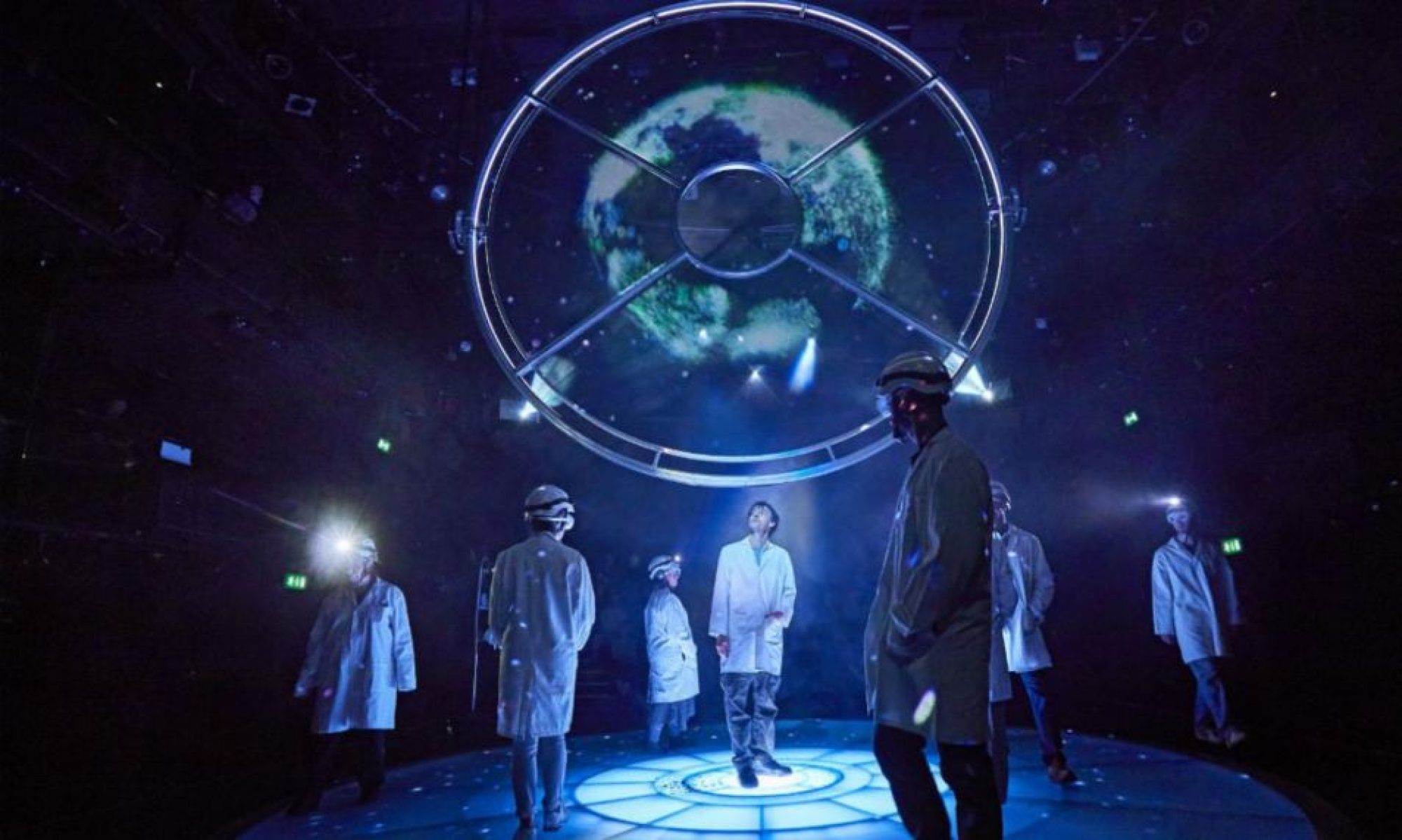
A NUMBER by Churchhill, Writer - Caryl Churchill, Director - Michael Longhurst, Designer - Tom Scutt, Lighting - Lee Curran, The Young Vic Theatre, 2015, Credit: Johan Persson/
John and Lex Shrapnel in A Number, Young Vic Theatre 2015, Credit: Johan Pehrsson

There are productions of A Number that have used test tubes a lot and very heavy scientific aesthetic and I think potentially that might have been interesting when the play first came out – when there was a sort of hype and horror around cloning. Actually what we wanted to do was push our aesthetic into a slightly different place. I put the idea of an interrogation room, which is more about responsibility and ‘blame’.

Did recent public debate and legislative changes surrounding mitochondrial donation influence this new production of A Number?

These advances are having huge gestalt shifts in our thinking, the idea of a three parent family, or the idea of being able to edit our genes are huge. The fact that we can’t achieve it at a certain level doesn’t mean conceptually we’re not on a certain pathway. It seems like as soon as we acknowledge the possibility of editing the genome, then we’re able to correct genetic diseases but we’re also a step nearer to eugenics. That is an important thing that we need to be thinking about.

Do you think the success of plays such as Constellations and A Number indicates a growing place for science in the cultural life?

I have directed predominantly new writing. I love theatre that is exploring who we are and science is a key enabler in understanding who we are, who we are now and who we are becoming. I think a writer who uses science to explore and answer that question can often tap into hugely exciting, revelatory and challenging areas of our humanity. I think as a theatre maker when you have a play that is exploring science, often formally – as is in the case of Constellations and actually in the case of A Number, both of those plays have the form of the play, or at least the theatrical experience dictated by the science. In A Number you’ve got one actor playing several clones. He literally embodies the act of cloning – but it also makes very good theatre. And in Constellations the form of the play was repeated versions of the multiverse. It’s an exciting theatrical provocation for an audience. In the design there’s lots of potential for metaphor. All of these things appeal to me as I’m interested in analytical ways of thinking. I guess it’s a personal preference but I think it’s a really valuable branch of theatre.

Would you argue that science in theatre works best when the science informs the structure rather than the didactic content?

Absolutely. If we’re trying to understand scientific principles there are probably much deeper lectures that one could go to, essays or journals that one could read or documentaries that one could watch. But I think what theatre can do is dramatize emotional consequences of what the science is. It can help us have an emotional understanding and ask the ethical question. Constellations poses what does it feel like to be in a multiverse? Actually, what that does is it makes you realize that I can’t access these other parallel universes, so my choices in this one are all the more precious. And that is the emotional feeling of the play.

I think A Number asks if we could do these things then what would be the ramifications be? What does it mean – this idea that man is born equally? Well genetically he’s not. If we are given these opportunities, how can they be used or abused?

A Number, directed by Michael Longhurst, runs at London’s Young Vic until 15th August.

The Royal Court Theatre tour of Constellations is at Trafalgar Studios until 1st August.

Latest Science Theatre News

As the Royal Shakespeare Company and the Royal Society jointly host a panel discussion on science–inspired theatre, there is plenty more news on science in theatre to catch up on this month.

Kirsten Shepherd-Barr, Tom Morton-Smith, John Barrow, Marcus du Sautoy and Richard Bean will join RSC deputy artistic director Erica Whyman for ‘A dramatic experiment: science on stage’ on Monday 11th May. The panel discussion at the Royal Society in London will be broadcast live and then available to view later on the Royal Society’s website.

A new UK tour of the Royal Court Theatre’s Constellations opens this month and will play at venues throughout England including Liverpool, Bristol and Cambridge until the beginning of July. The production features Joe Armstrong and Louise Brealey, who is perhaps best known for her role in television’s Sherlock. The recent production of Constellations on Broadway has earned Ruth Wilson a Tony Award nomination for playing Marianne in Nick Payne’s one act play about the relationship between a bee keeper and a physicist, played out in multiple universes.

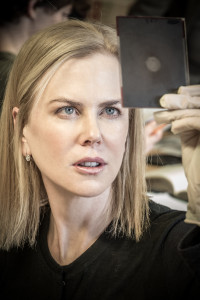
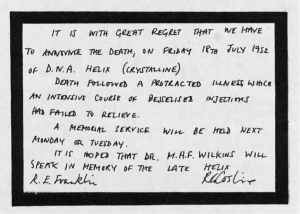
The profile of science in London’s West End, recently raised by the transfer of Tom Morton-Smith’s Oppenheimer, will further increase in September when Michael Grandage stages Photograph 51 at the Noel Coward Theatre. Nicole Kidman will play Rosalind Franklin, the pioneering crystallographer who had a pivotal role in the discovery of the structure of DNA, in the first UK production of Anna Ziegler’s play.Constellations_uk_tour

Meanwhile it’s been recently announced that Ophelia Lovibond from BBC satire W1A will play Connie in Sheffield Theatres’ production of Lucy Prebble’s The Effect, which opens at the Cruicible Studio in June.

Finally, Menagerie Theatre Company have announced that their Hotbed Festival in July 2015 will include a new play by Craig Baxter called Pictures of You, inspired by the use of imagery as a treatment in mental health, meaning there is plenty in store for science in theatre in the coming months.

Leading Big Science: Oppenheimer Fuses History and Office Politics

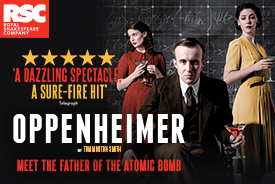
This week the Royal Shakespeare Company’s Oppenheimer play transfers to the Vaudeville Theatre in London. Science Centre Stage caught the production in Stratford-upon-Avon to see what audiences in London can expect from the West End Transfer

Oppenheimer was commissioned from Tom Morton-Smith by the RSC as part of their ongoing mission to tackle big ideas on stage in a way that compliments and challenges the Shakespeare productions that the RSC is naturally best known for. In his programme notes for Oppenheimer, Morton-Smith says that he pitched the idea for the play after attending a workshop at the RSC in which writers were invited to consider the “scale of the ancient Greek chorus and what sort of language and literary register is required to fill a space such as the Swan Theatre.” A tall order indeed.

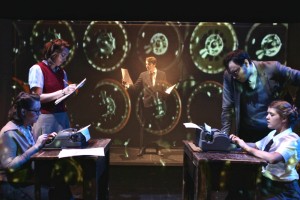
The play tells the tale of the people who worked on the Manhattan Project during the Second World War and the race to develop the world’s first atomic weapon. J Robert Oppenheimer as project leader is naturally the focus of the piece. His oft-troubled relationships with fellow scientists, friends, family and lovers are presented on a background of strained ideological, military and personal politics. With a cast of over twenty, the list of characters reads like a who’s-who of 20th century physics. Add to this an ensemble of live musicians, cabaret singing, and choreographed parties and there is no doubt that director Angus Jackson achieves the sense of scale that was sought from the outset.

The figure of Oppenheimer might initially bring to mind classical tragedy. But as Morton-Smith points out, this aspect has been tackled previously. Moreover, many of the conventionally tragic aspects of his character (“Shakespearen in its rise and fall” according to Morton-Smith) occurred much later in his life, a period not covered in this play. If the spirit of Shakespeare infuses this work at all then it must be in the sense that Oppenheimer might be more appropriately considered as a history play rather than a tragedy. The depth of information and level of research represented in the work is apparent throughout and must surely represent as historically and sociologically a complete account of the period as it is practical to achieve in an evening’s theatre.

And where there are biographical facts there is also science. This is not a play that shies away from presenting the science of the bomb up-front. Where other plays have perhaps turned largely to metaphor to relate scientific ideas, much of the science of fission and weapon design is conveyed directly in a series of short lectures. These lectures acknowledge the artifice of theatre and allow each character to speak directly to the audience. In contrast, the sequences in which characters are discussing ideas with each other in the dialogue struggle to convince that this is really the language knowledgeable colleagues use to talk to each other. This is always the dilemma of representing professional activity on stage or screen, from a television police show to a piece of science-theatre like Oppenheimer; there is always a certain amount of mutual knowledge in professional communication that is simply not possible to assume in performance. Nonetheless, the delivery is emphatic, perhaps in a conscious (but unnecessary?) effort to make the content more interesting by expressing it with confidence.
Oppenheimer-production-2-2015-541x361
Does the play fall victim to it’s own scale of ambition? It is interesting that Morton-Smith chooses to continue the plot for some time beyond the initial bomb test at the Trinity site. It is no spoiler to point out that the Manhattan scientists achieved their goal and created a weapon – that fact is recorded forever in history. The events at the end of the war and beyond are part of the common historical record: the destruction of Hiroshima and Nagasaki and the political tensions that led directly to the Cold War. Could the play have ended with blackout following the Trinity explosion? Naturally it can be argued that the most significant and complex moral questions and reactions are to be explored after the bomb is deployed in warfare. But at three hours long the endurance required of the audience must be earned not assumed.

In a climate where science and scientists are increasingly welcomed into cultural conversation, it is both commendable and a risk for the RSC to back a large scale, full length production that doesn’t shy away from the difficult questions and details of the science. But with the risk comes a responsibility to make sure the topic is conveyed in an accessible manner, but which is ultimately good theatre. It will never be possible to achieve this balance perfectly. The scale of Oppenheimer is unique for this genre, and something only possible for producing companies such as the RSC to enable. The great achievement is that it has been commissioned and produced at all. The commercial and critical success of the Stratford production has clearly been sufficient to merit a West End transfer and the opportunity for larger audiences to engage with it can be no bad thing.

Oppenheimer is at London’s Vaudeville Theatre until 23rd May 2015.

Tom Stoppard in Conversation with Nicholas Hytner

Things don’t have thoughts..if it really is physics then we’re just marking our own homework

Last month Tom Stoppard discussed his new play The Hard Problem with its director Nicholas Hytner in a National Theatre Platform talk. Some time later, a few newspapers reported that Stoppard had claimed audiences don’t get all the references in his plays any more. Listen to the discussion below to hear what Stoppard really said and why.

[soundcloud url=”https://api.soundcloud.com/tracks/194188779″ params=”auto_play=false&hide_related=false&show_comments=true&show_user=true&show_reposts=false&visual=true” width=”100%” height=”450″ iframe=”true” /]


Evolutionary Biology in The Hard Problem

Audio of Prof Armand Leroi’s National Theatre Platform Talk on the Evolutionary Biology in Tom Stoppard’s The Hard Problem, given in the Dorfman Theatre on 16th February 2015.

[soundcloud url=”https://api.soundcloud.com/tracks/191912641″ params=”auto_play=false&hide_related=false&show_comments=true&show_user=true&show_reposts=false&visual=true” width=”100%” height=”450″ iframe=”true” /]

Teenagers to Storm the National Theatre in Brain Science Frenzy

An energetic new piece of theatre structured around some excellent science communication will be part of the National Theatre’s new 2015 summer season.

Islington Community Theatre’s Brainstorm, which was first performed at London’s Park Theatre earlier this month, will be re-staged on 21st-25th July 2015 in the National Theatre’s temporary theatre on the South Bank.

Brainstorm was developed with support from the Wellcome Trust

A cast of ten teenagers from Islington schools devised Brainstorm under the direction of Ned Glasier and Emily Lim, based on ideas in a TED talk by neuroscientist Prof Sarah-Jayne Blakemore. The result is a funny, chaotic and moving account of teenage life, infused throughout with the latest science of the adolescent brain.

The energy of Brainstorm more than filled the modest space of the sold-out Park Theatre in January, so it is excellent news that the production will reach wider audiences as part of the NT summer programme.

Public booking for Brainstorm opens on 12th February. Advance booking for National Theatre supporters is already open.

[ted id=1563]

Discover More Science in Theatre…

Oppenhiemer RSC
Oppenheimer at the Royal Shakespeare Company

Welcome to new visitors who have arrived via the RSC Chemistry World blog. If you are interested in finding out more about The Effect by Lucy Prebble, there will be a new production in Sheffield in June 2015. Oppenheimer by Tom Morton-Smith opens in the Swan Theatre in Stratford-upon-Avon on 15th January 2015. The RSC has a Q&A with the writer Tom Morton-Smith here.

For a scholarly account of science and theatre, Dr Kirsten Shepherd-Barr’s book Science on Stage is an excellentScience on Stage place to start. Carl Djerassi’s plays (including Insufficiency) and Shelagh Stephenson’s An Experiment With An Air Pump may also be of interest. Chemist Rowena Fletcher-Wood has recently produced a play about Ludwig Boltzmann called Trusting Atoms.

Follow the links from each play on sci-stage.com to find details of past productions or browse for new plays and productions using the map, the calendar and Twitter.

New productions opening in January 2015 with a scientific theme include The Hard Problem at the National Theatre and Brainstorm, a devised play by Islington Community Theatre about the teenage brain, in connection with the Wellcome Trust.

Oppenheimer and a New Stoppard Play for 2015

There are some promising events in store for science-on-stage in 2015 as new works premiere and established pieces are revived.

The Royal Shakespeare Company will open its winter season in Stratford-Upon-Avon with a new work by Tom Morton-Smith about the physicist J. Robert Oppenheimer. Depicting work on the Manhattan Project at Los Alamos in the 1940s, Oppenheimer will preview from 15th January and then run in the Swan Theatre until the 7th March.Oppenheimer at the RSC

It’s 21 years since Tom Stoppard’s classic Arcadia premiered at the National Theatre in London but it’s only a few weeks until the NT produce new work by Stoppard with a scientific theme. The Hard Problem will be the last production to be directed by outgoing NT director Nicholas Hytner. It promises to be an intriguing production to finish on, as Stoppard tackles brain science and consciousness in his first new play since 2006. The sold out production will be staged in the newly refurbished Dorfman (formally Cottesloe) Theatre and will run from the 21st January to April 2015.

The Hard Problem Tells the Story of a psychologist at a brain research institute grappling with the issue of consciousness.
The Hard Problem tells the Story of a psychologist at a brain research institute grappling with the issue of consciousness.

Also in the new year, English Touring Theatre will take a production of Stoppard’s Arcadia directed by Blanche McIntyre around various venues until April, beginning at the Theatre Royal Brighton on 20th January 2015.

With Southampton Nuffied Theatre’s production of Caryl Churchill’s A Number (with stage design by Tom Scutt) to transfer to The Young Vic in London in later 2015 and the Broadway premiere of Nick Paynes’s Constellations, there’s plenty in store for science in theatres in 2015.

Ludwig Boltzmann Portrayed in New Science Play

Ludwig Boltzmann 1844-1906

A  new play depicting Austrian physicist Ludwig Boltzmann opens this week in Birmingham. Trusting Atoms: The Last Trials of Ludwig Boltzmann by Rowena Fletcher-Wood will be performed on the 24th-27th September in the Cadbury Room on the University of Birmingham’s Edgbaston Campus.

Described as portraying Boltzmann “in his battle to save the dying theory of atoms, his equation and his career”, Trusting Atoms also features Lise Meitner, who was inspired by Boltzmann during her time at the University of Vienna in the early 20th centuary.

Further information about the production is available here.